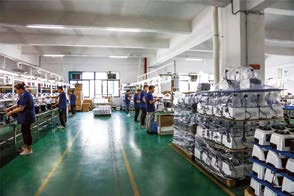
LYBETY is the company’s coffee equipment brand. Development, manufacturing and sales are brought together, connecting equipment selection, customization and purchasing with the manufacturer.
BrandLYBETY · Coffee equipment
LocationZhongshan, Guangdong, China
OperationsDevelopment · Manufacturing · Sales
Coffee equipmentEspresso machines, grinders, electric tampers, portafilter cleaners and milk-frothing equipment
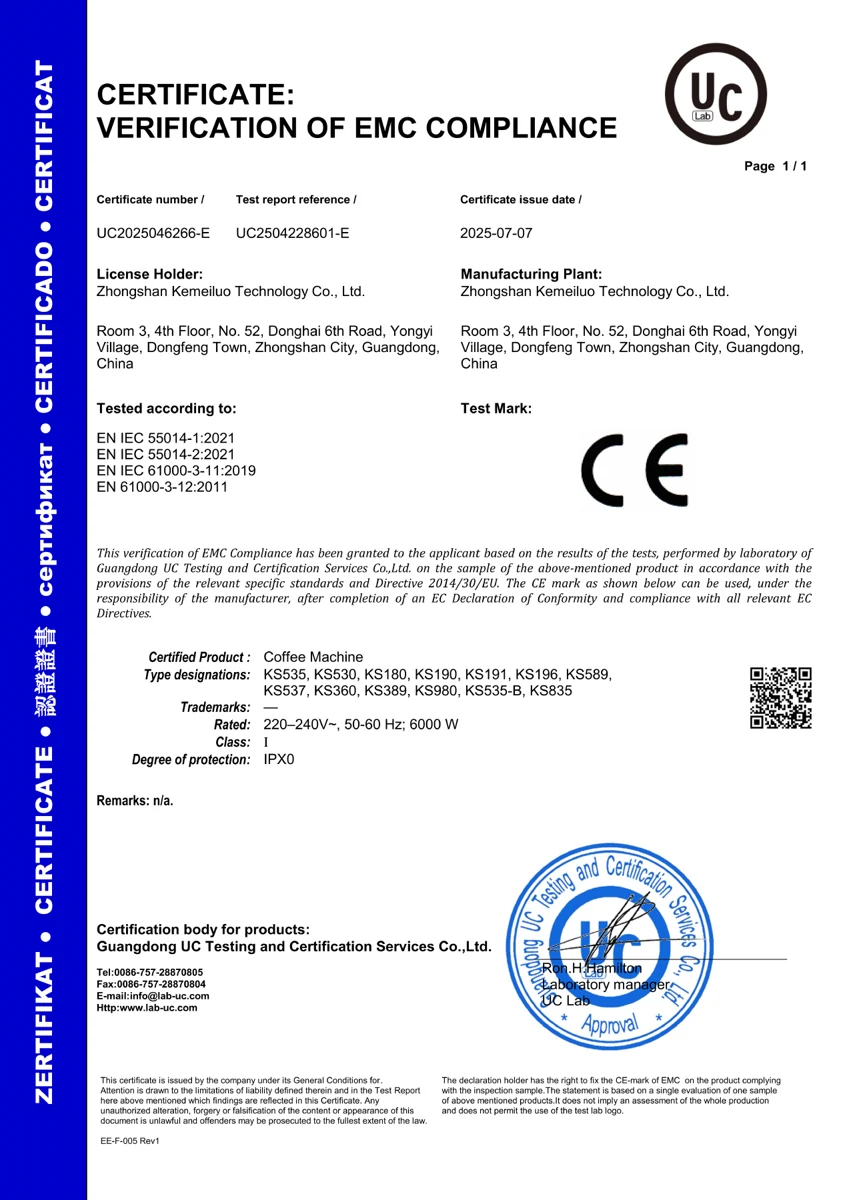
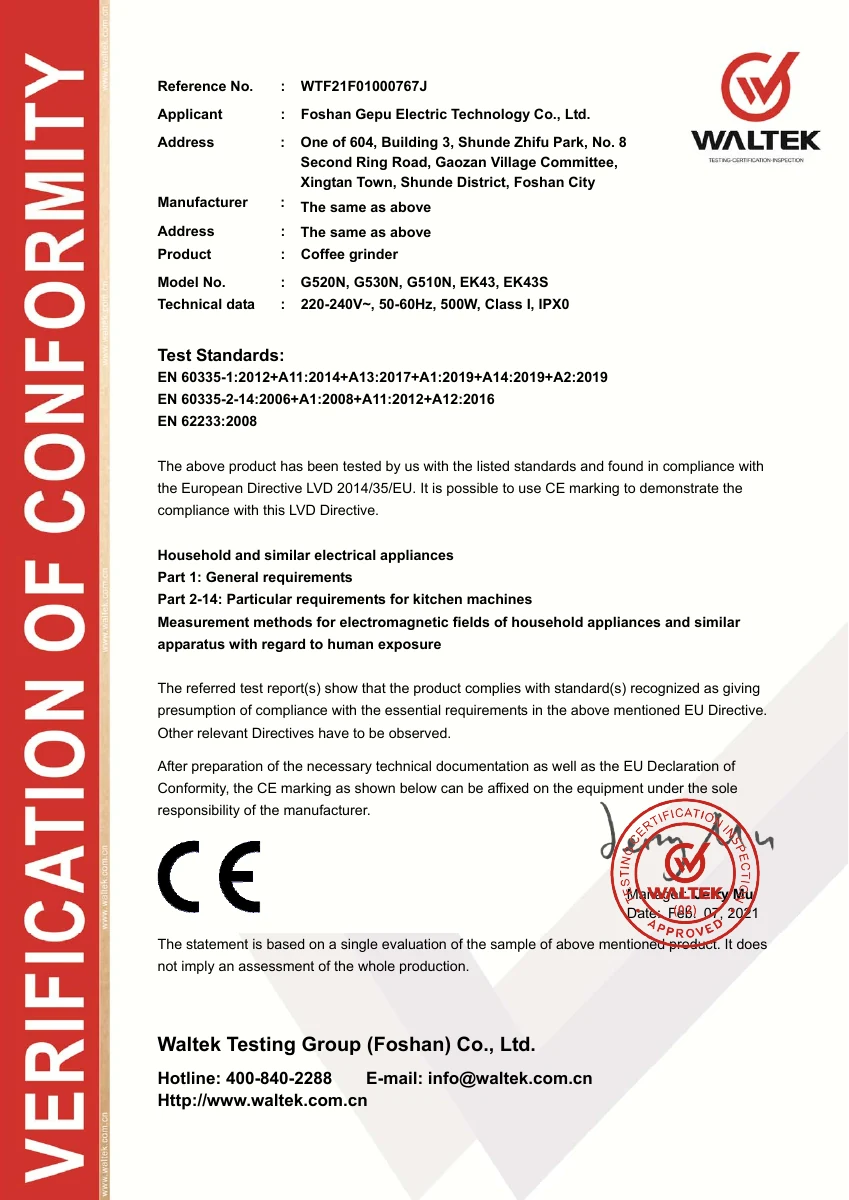
Explore CE-related testing and RoHS documents, with product scope, model numbers and issuing details.
04documents
Documents are shown under their original applicants and model codes. Confirm that your order configuration falls within the document’s scope before purchasing.
Test standardsEN IEC 60335-1:2023/A11:2023EN 62233:2008
Expiry dateNo expiry date stated in the document
The document identifies an electric coffee portafilter cleaner. Its directive field reads “LVD Directive 2014/30/EU”; this is preserved as supplied and should be clarified before purchase.
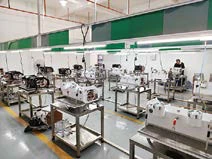
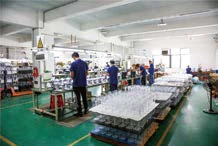
The company brochure describes incoming inspections, in-process checks and QA testing carried out by the QC team, spanning components and product manufacturing.
01 / IQC
Incoming inspections
Inspect incoming components and materials before they enter production.
02 / IN-PROCESS
In-process inspections
Carry out quality checks during manufacturing.
03 / QA
QA testing
Espresso machines are checked for temperature, flow, sealing and component fit. Grinders undergo repeated tests with real beans to assess grind fineness and performance.
PRODUCT COMPLIANCE
Compliance references in our brochure
The brochure references the standards below. Supplied certificate documents are available above; other brochure references require separate confirmation for the specific model.
GS · CE
The brochure lists GS and CE (EMC / LVD).
CB · ETL
The brochure lists CB and ETL among its standards.
LFGB
LFGB is referenced in the brochure.
RoHS · REACH
The brochure lists RoHS and REACH.
BEFORE YOU PURCHASE
Match the documentation to your model.
Share your preferred model, sales country and configuration to discuss specifications, certification or test documents, installation and maintenance information. Confirm purchasing requirements against the scope of the actual documents.
For equipment selection, prepare your daily volume, menu, counter dimensions and local power supply.
FAQ
01Which espresso machine suits my needs?
Choose for peak demand, milk drinks and staffing, then check space, power, water and drainage. Two groups allow parallel brewing; capacity also depends on the grinder and workflow.
02Do I need a separate grinder?
Yes, for whole beans if the machine has no built-in grinder. Use an espresso-capable grinder and grind just before brewing. Pre-ground coffee compatibility depends on the basket and model.
03How long should the machine warm up?
Wait until the machine is ready and the group and portafilter are warm. Warm-up time varies by model; follow its manual.
04What water should I use?
Use drinking water that meets the model’s specifications and treat hard water appropriately. Check compatibility before using distilled or unremineralised reverse-osmosis water.
05How do I adjust flow and flavour?
Keep dose and yield consistent. Try a finer grind for fast flow or a coarser grind for slow flow, changing one variable at a time. Beans and brew ratio also affect sourness and bitterness.
06Why is the foam coarse or steam weak?
Check steam readiness, water supply and tip blockage. Use cold milk and adjust the tip position. Wipe and purge as directed after use; contact service if steam stays weak.
07How often should I clean or descale?
Cleaning removes oils and milk residue; descaling removes mineral deposits. Clean baskets, portafilters and the tray after use, and the wand after every milk drink. Follow the model’s descaling instructions; consult service for commercial boilers.