
Cafés planning two brewing stations
Plan two extraction positions for your shop menu, then review actual peak orders and counter layout.
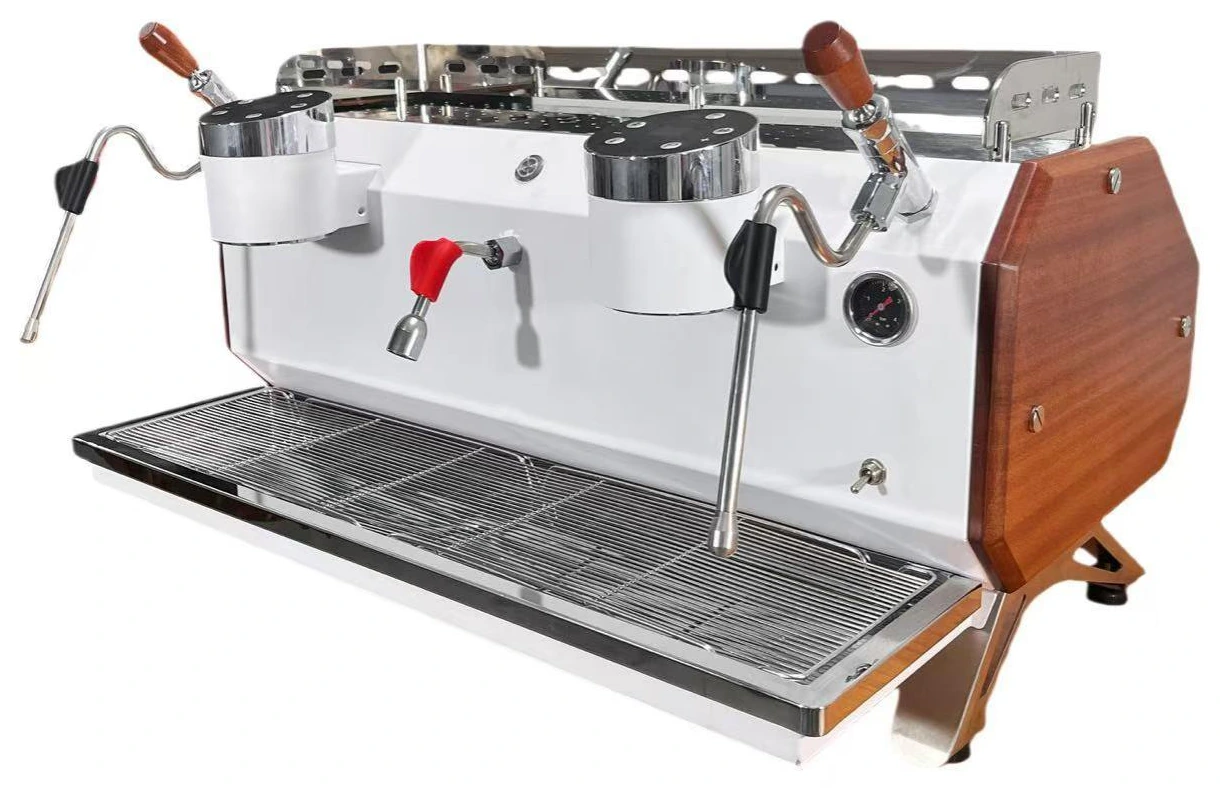
Product catalogue photographs. Confirm final appearance and configuration before ordering.
FEATURED COMMERCIAL · -5 SERIES
For businesses planning for 600–800 cups per day. Two group heads provide room for a coordinated workflow, with temperature, pre-infusion and shot-volume settings.
Daily output is selection guidance. Actual capacity depends on recipes, peak-hour workflow and operating conditions.
01 / APPLICATIONS
For shop operators and service teams that need two brewing stations.
Plan two extraction positions for your shop menu, then review actual peak orders and counter layout.
Plan shared espresso, milk and handoff tasks around the two group-head positions.
Plan equipment, power and water around your service periods and order mix; confirm capacity against your menu.
Choose 835-5 around your commercial shop workflow; consider 510M first for home use and personal recipe exploration. Daily volume guidance is 600–800 cups, subject to menu, peak workflow and operating conditions.
02 / KEY FEATURES
Two group heads; (5 L steam + 1 L extraction) × 2, with separate steam and brew boilers. Plan your workflow around the menu.
Adjust brewing temperature, pre-infusion and shot volume to develop recipes for different coffees; confirm the selected control version.
Rated power is 6000 W, with 220 V / 50 Hz listed. Check the circuit, installation and water supply for the selected 835-5 version.
03 / BRAND & MANUFACTURING
See the brand’s production environment and manufacturing process.
Watch the filmReview features and specifications, then confirm your configuration.
View product detailsConfirm which certificates apply to your model and destination market.
View credentialsDifferent roast levels and origins call for a recipe suited to the coffee. Multi-boiler temperature control lets you adjust brewing water temperature alongside pre-infusion and shot volume.
830-5, 835-5 and their -3 variants refer to the January 2026 catalogue; 510M information refers to the brand’s 2026 equipment sheet. Confirm configuration, electrical supply and installation requirements before ordering.
Adjustable 85–93°C extraction temperature. Set brewing water temperature for your beans and recipe within the model’s supported range.
Adjustable 0–60 second pre-infusion, shot timing and programmable volume.
Separate brewing and steam pressure gauges and a 360° steam nozzle.
Review dimensions, electrical requirements and core specifications to plan your coffee counter.
830 and 835 specifications for the -5 and -3 versions refer to the January 2026 catalogue. Confirm configuration, electrical supply and installation requirements before ordering.
Equipment selection depends on your installation. Share the following information to discuss the configuration.
Share your requirementsConsider the 835 when your commercial counter needs two brewing positions and a team workflow for espresso, milk and drink handoff. The 830 provides one brewing position. Choose around your menu, peak orders, staffing and counter space; two groups do not guarantee twice the output.
The catalogue lists two sets of a 5 L steam boiler and a 1 L brew boiler: (5 L steam + 1 L brew) × 2. Steam and brew boilers are separate. Confirm the selected control version and configuration before ordering; boiler capacity alone does not establish sustained output or steaming speed.
Body dimensions are 570 × 780 × 480 mm (L × W × H), with a net weight of 47 kg. The catalogue lists 6000 W, 220 V / 50 Hz. Body dimensions do not include working or service clearance. Confirm counter space, electrical supply, water, drainage and installation requirements for the selected control version before ordering.
Share the destination country or market, preferred control version and finish, quantity, drinks menu, peak orders, team roles, usable counter dimensions, electrical supply, water and drainage. These details help review model suitability, configuration and the quotation scope for your project.
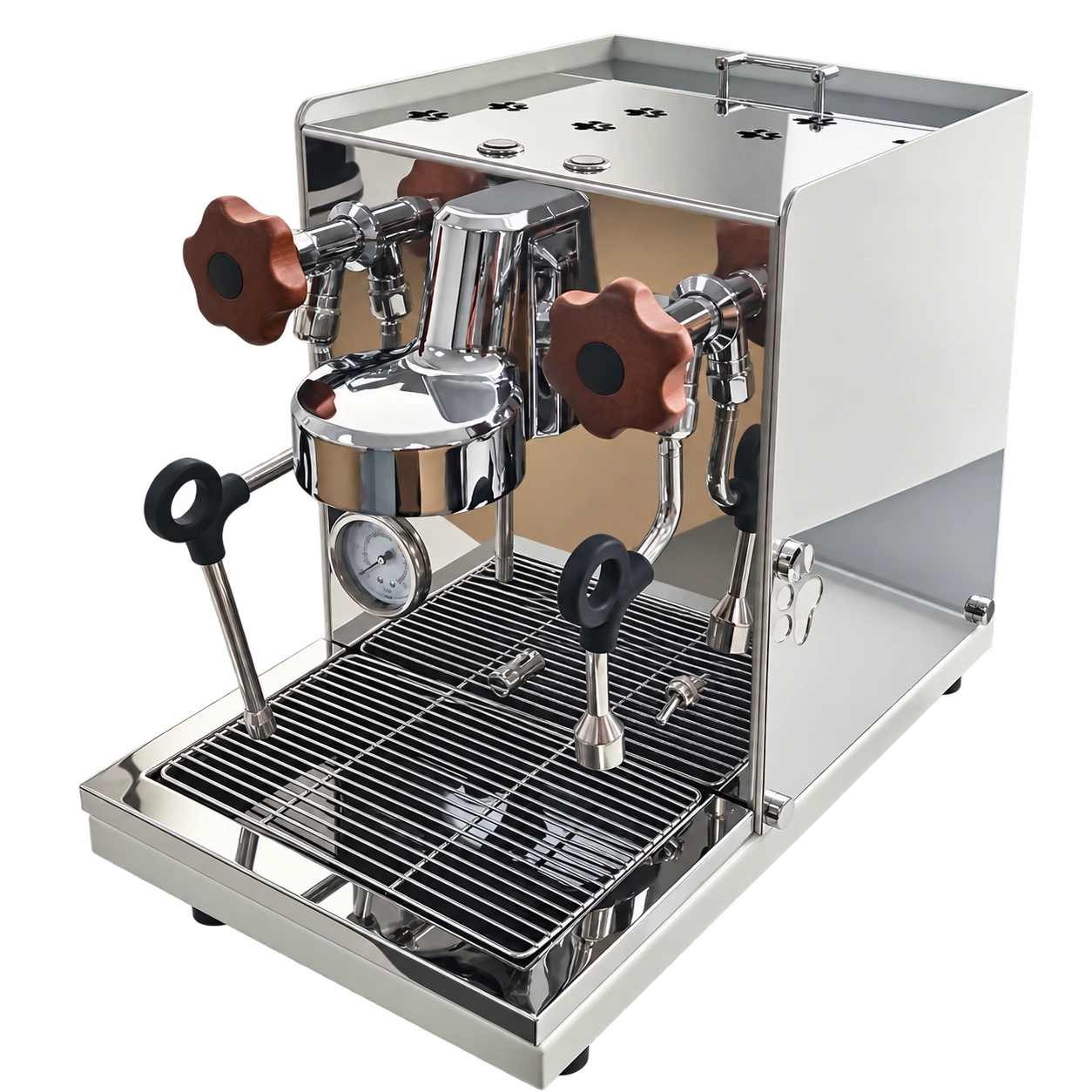 FEATURED THIS YEAR
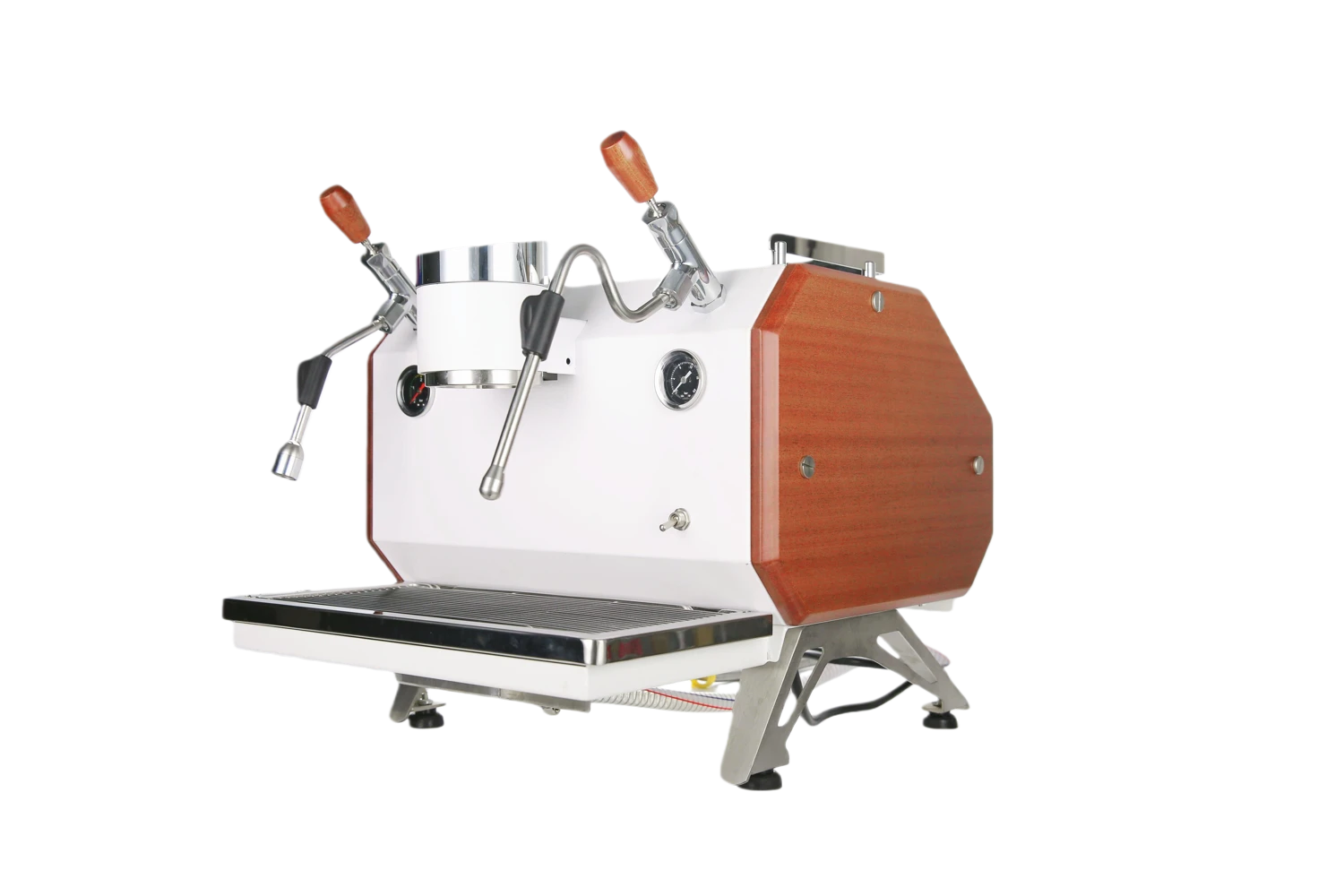 FEATURED
Single-group commercial espresso machine
LET’S TALK COFFEE
Have a machine in mind, or a new coffee project? Share your requirements to discuss equipment and purchasing options.
For equipment selection, prepare your daily volume, menu, counter dimensions and local power supply.
Choose for peak demand, milk drinks and staffing, then check space, power, water and drainage. Two groups allow parallel brewing; capacity also depends on the grinder and workflow.
Yes, for whole beans if the machine has no built-in grinder. Use an espresso-capable grinder and grind just before brewing. Pre-ground coffee compatibility depends on the basket and model.
Wait until the machine is ready and the group and portafilter are warm. Warm-up time varies by model; follow its manual.
Use drinking water that meets the model’s specifications and treat hard water appropriately. Check compatibility before using distilled or unremineralised reverse-osmosis water.
Keep dose and yield consistent. Try a finer grind for fast flow or a coarser grind for slow flow, changing one variable at a time. Beans and brew ratio also affect sourness and bitterness.
Check steam readiness, water supply and tip blockage. Use cold milk and adjust the tip position. Wipe and purge as directed after use; contact service if steam stays weak.
Cleaning removes oils and milk residue; descaling removes mineral deposits. Clean baskets, portafilters and the tray after use, and the wand after every milk drink. Follow the model’s descaling instructions; consult service for commercial boilers.